ServicesFlooring Installation
Flooring Installation in Landrum
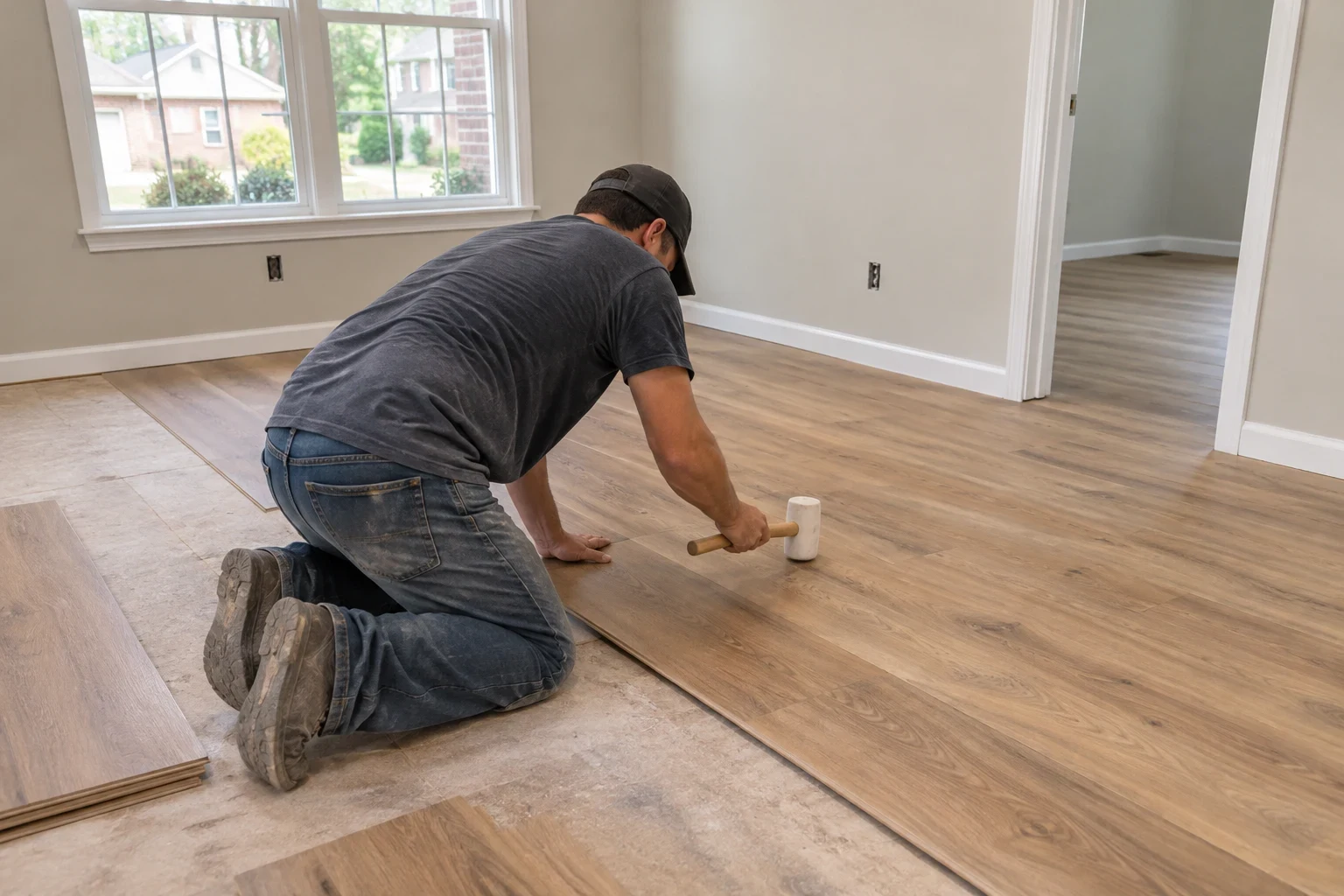
Hardwood, engineered wood, tile and luxury vinyl plank, set in new custom homes and in houses where families are living through the work. Every floor starts at the subfloor, and every workday closes with swept rooms, neatly stacked tools and the rest of your home untouched.
New Floors Without a House Full of Dust
Most of what makes a floor last happens underneath it. Before anything new goes down, we check the subfloor for flatness and soft spots, take moisture readings in the room and in the material, and repair what turns up. That groundwork is why tile holds together at the grout lines and why plank floors do not open gaps or curl at the edges a year later.
Many of the people we lay floors for live in the house during the job. We tape plastic across doorways, keep our saws hooked to dust collection, cover the floors and stairs we cross, and vacuum the work area before heading out every afternoon.
Floors can be a project on their own or one stage of something larger. We take them on either way, including as part of a home remodeling job or a custom home building project.
What Our Flooring Work Includes
- Tear-out and haul-off
- Carpet, pad, tack strip, sheet vinyl or old tile come up and leave the property with us. We also scrape off leftover staples and dried adhesive, since any ridge left behind will show through a new floor.
- Subfloor repair and flattening
- We screw down loose panels, cut out and replace damaged sections, and fill dips or grind down humps. Tile and long planks need a much flatter base than carpet did.
- Moisture readings and acclimation
- We check the subfloor and the flooring itself before anything is installed. Solid and engineered wood rests in the house until it matches the room, a step that matters in humid Upstate summers.
- Installation matched to the material
- Hardwood nailed or glued down, engineered wood floated or glued, tile on the correct backer board or membrane, and click-lock vinyl plank. Underlayment and fasteners follow each manufacturer's instructions.
- Finish carpentry at the edges
- Where the old wall trim can be saved, we put it back carefully; where it can't, we cut and install new pieces to suit the floor height. Doorways and room changes get a matching strip so one surface meets the next cleanly, doors clear without dragging and nobody catches a toe on a lip.
- Cleanup and final walkthrough
- The work rooms are vacuumed every day. On the last visit the whole area gets a final cleaning, and we go room by room with you before the job is done.
When It Is Time for New Floors
Spots that flex underfoot
If part of the floor sinks or springs when you step on it, the subfloor is usually the cause, and an old leak is a common culprit. New flooring laid over it only covers the problem for a while.
Tile or grout cracking in a line
Cracks that keep returning along the same path tend to mean something is moving below. We inspect the base before we price any new tile.
Wood that cups, gaps or squeaks
Raised board edges, seams that widen each winter and tighten each summer, or a squeak with every step all point to moisture or fastening trouble.
A finish past refinishing
Engineered wood with a thin top layer, or solid boards sanded down many times over, reach a stage where a new floor is the honest answer instead of another sanding.
Floors that no longer fit the house
Carpet in the kitchen, rooms that clash after an earlier remodel, or a newly opened floor plan are all good reasons to run one continuous floor.
From First Visit to Final Walkthrough
- 1
Site visit
We see the rooms in person, check the subfloor wherever we can reach it and look into the crawlspace if there is one. Then we compare materials and how each holds up to pets, children, moisture and everyday wear.
- 2
Line-item estimate and dates
Your written estimate lists removal, subfloor work, material and labor separately. We agree on a schedule and let you know which rooms will be closed off and for how many days.
- 3
Setting up protection
The first morning, plastic goes up at doorways and coverings go down over finished floors along our route. When the weather cooperates, cutting happens outdoors or in the garage, and any furniture moving is planned with you ahead of time.
- 4
Prep and laying the floor
The old surface comes out, the subfloor is corrected and the new floor goes in. Before we leave each day, we vacuum, stack material tidily and keep hallways open.
- 5
Finishing and handover
Trim and transitions are installed, coverings come up and the rooms get a final cleaning. We walk through together and go over how to care for your new floor.
What Shapes the Cost of a New Floor
Square footage matters less than most people assume. What sits beneath the floor often matters more. We price a job only after seeing the rooms, and your written estimate lists every part of the work on its own line, so nothing is lumped together.
- The material you choose
- Solid hardwood, engineered wood, porcelain tile and vinyl plank each carry a different material cost and a different amount of labor. Large-format tile, herringbone and other patterns need extra layout and cutting time.
- How sound the subfloor is
- Dry, flat plywood lets the work move quickly. Water damage, sagging joists or a slab that needs self-leveling compound adds prep hours and material.
- What has to come out
- Carpet comes up fast. Tile bedded in mortar or sheet vinyl glued to the subfloor takes more time to remove and haul away.
- Room shapes and layout
- Stairs, closets, lots of doorways and walls that are out of square all mean more cuts and more trim. A single open space usually costs less per foot than a string of small rooms.
Common Questions About New Floors
Something not covered here? (864) 754-0177
Will we be able to live at home during the install?
In most cases, yes. We work one section at a time and close off the rooms we are in, so the rest of the house stays usable and mostly free of dust. A kitchen is the hard one, and we schedule it with you so you are without it for as short a stretch as possible.
What flooring stands up best to pets and children?
Luxury vinyl plank and porcelain tile handle scratches and spills better than most options. Hardwood can do well too if you choose a harder species and a low-sheen finish that hides wear. We will explain the tradeoffs plainly and will not steer you toward the priciest choice.
Why does wood flooring have to sit in the house before it goes down?
Wood absorbs or releases moisture until it reaches balance with the room around it. Installed too soon, it can shrink and open gaps or swell and cup. We take moisture readings and start once the numbers are in the right range.
Can new flooring go right over what is there now?
Occasionally, when the existing floor is flat, firmly bonded and solid, and the added thickness will not interfere with doors or cabinets. More often we suggest taking it out so we can see the subfloor and fix anything wrong with it.
Do you work on both sides of the state line?
Yes. Our company carries licenses in South Carolina and North Carolina, along with insurance in both. Flooring work in Landrum, Inman, Greer or just across the line in North Carolina is handled to the same standard.
Talk Through Your Floors With Us
Tell us which rooms you are thinking about and what is there now. We will set up a time to see the space, check the subfloor and give you a written estimate.