ServicesGrading
Grading in Landrum, SC
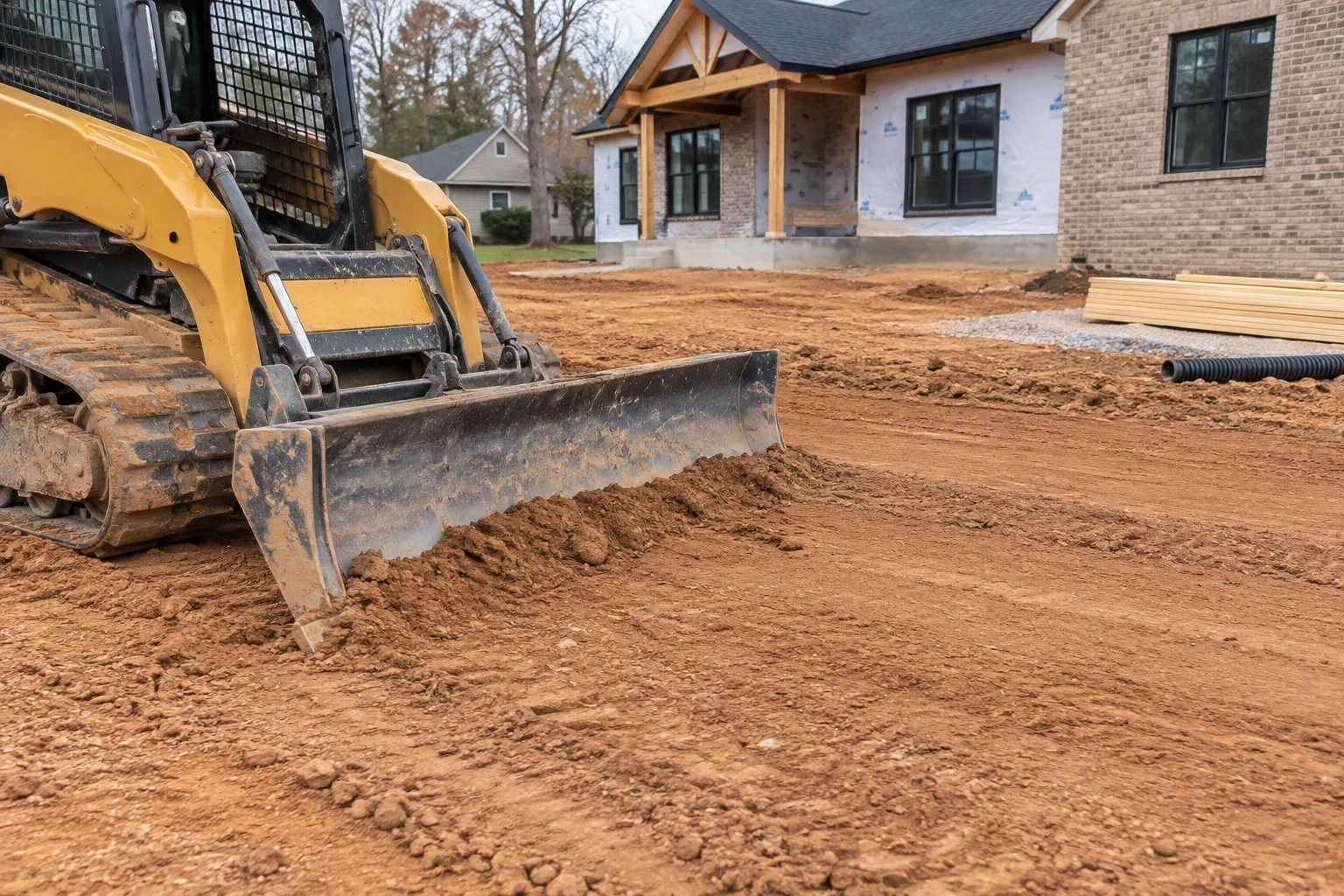
Good grading sets the elevations of your lot so rain drains off the right way, foundations stay dry and driveways hold up. We compact soil carefully, guard trees, drives and beds you want kept, and tidy the site before we leave each evening.
Ground that is shaped on purpose
Grading is the work of moving and compacting soil to set the elevations of a lot. On a new build it creates a level, stable pad for the foundation and a gentle fall away from the house on every side. On an existing home it corrects low spots, soggy corners and slopes that send runoff toward the crawlspace instead of away from it.
Most of the soil here is dense red clay. It packs hard when it is dry, turns slick when it is wet, and holds water against a foundation if the ground around it is flat or tilted the wrong way. Good grading accounts for that with the right slope, firm compaction and a finished surface that can take seed, sod or stone.
We treat your property the way we would want ours treated. Equipment stays on an agreed path, existing driveways and trees are protected, and loose soil does not end up on the street. You see the shape of the work each evening, not a pile of mud.
What our grading work includes
Building pad preparation
We cut high ground and build up low ground to a level pad for a new custom home, packing each thin layer of added soil so the foundation rests on firm footing. This step usually comes after land clearing and just ahead of foundation work.
Positive drainage around the house
The ground is pitched downward from the foundation for several feet on all sides, carrying roof runoff and rain out to the yard or a swale.
Swales and runoff paths
Shallow channels guide water around the house and off the property along a route we plan with you. We keep them broad and gentle so a mower can cross them.
Driveway and walkway subgrade
We shape and compact the base beneath a new drive or path so it sheds water to the sides and resists ruts and sinking.
Finish grading and topsoil
After the rough contours are right, we smooth the surface and add topsoil where needed, leaving ground ready for grass or planting.
Keeping soil on your property
Silt fence, straw cover and a stabilized gravel entrance hold soil in place during the job, so it stays out of ditches, the neighbors' yards and the road.
When your property is asking for grading
- Puddles hug the house
- If rain collects against the walls and sits there for hours, the ground is flat or pitched toward the home. That water eventually works its way under the house.
- A damp or musty crawlspace
- Wet insulation, standing water or a mildew smell below the floor often come from the slope outside rather than a plumbing leak inside.
- Washouts and gullies
- Ruts carved through the lawn or bare clay exposed after a storm show water running fast along a path nobody chose.
- Sunken soil along the walls
- Backfill around older homes settles with time. A shallow dip beside the foundation turns into a bowl that gathers runoff.
- Raw land waiting for a build
- Before footings can go in, an uneven lot needs a stable pad with the right fall. Getting that right at the start protects everything built above it.
How a grading job runs
- 1
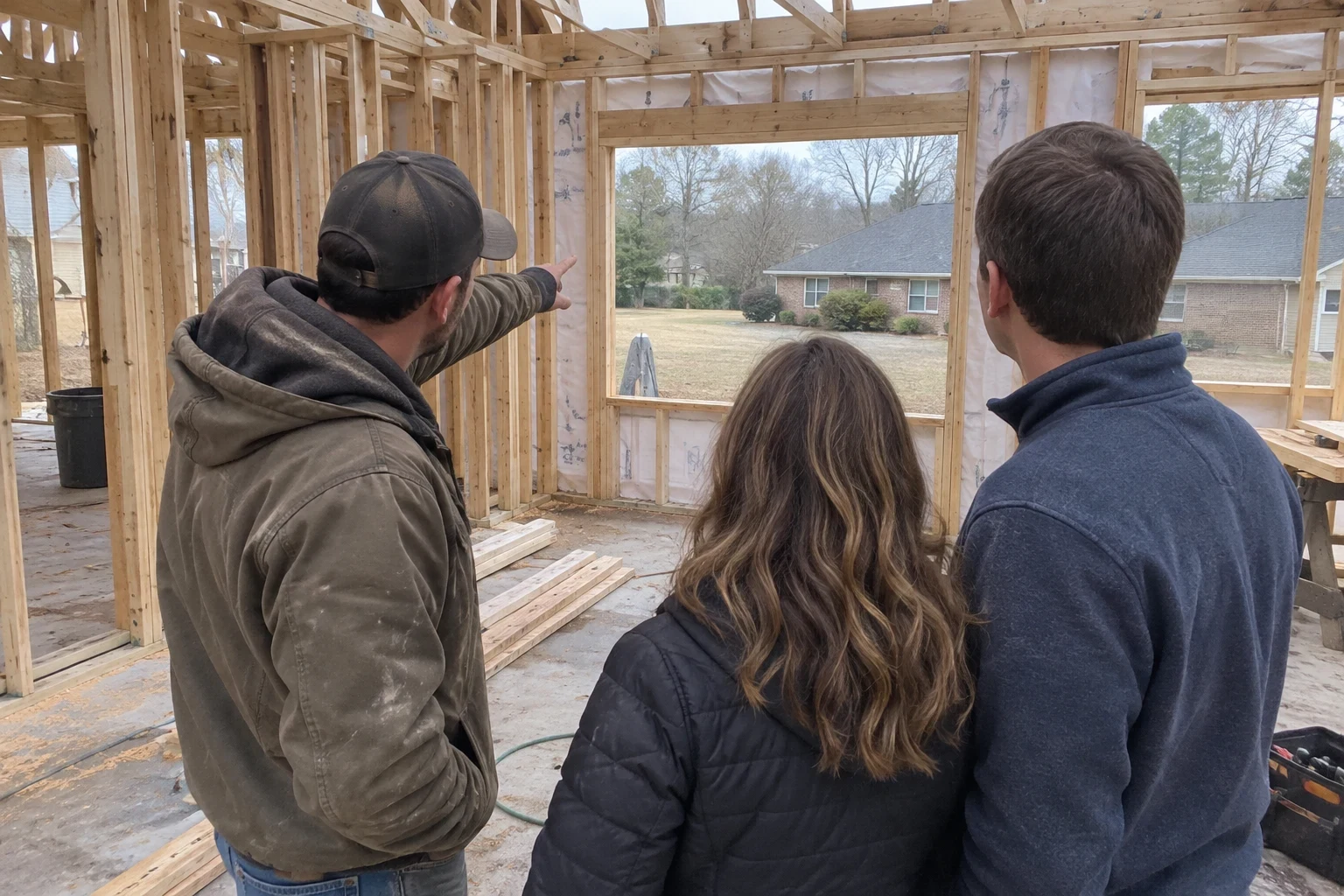
We walk the lot with you
We look at how water moves now, where it collects and where it can leave the property. We also note trees, utilities, septic areas and anything you want left untouched.
- 2
We set the plan and the stakes
We mark target elevations with stakes and paint, agree on an access route for equipment and put up erosion control before any soil moves. You know where machines will drive and where they will not.
- 3
Cut, fill and compact
We move soil from high spots to low ones, bring in or haul off fill as needed, and compact in lifts rather than dumping it all at once. We check slopes as we go instead of eyeballing the finish.
- 4
Finish grade and stabilize
We smooth the surface, spread topsoil and seed or straw exposed ground so it holds through the next rain.
- 5
Daily cleanup and a final walk
Each day ends with tracked soil scraped off drives and the street swept. On the last day we walk the finished grade with you and explain how the water will move.
What drives the price of a grading job
Every lot is different underneath, so we price grading only after we have walked the ground with you and heard what you want from it. The estimate comes to you itemized, line by line, so nothing is buried in a single total. Below are the factors that tend to matter most.
- Area and steepness
- Correcting a low corner beside an existing house is a small job. Shaping a full building pad on a hillside lot is a much larger one, and steeper or wider ground means more machine time.
- Volume of soil moved
- When the high spots supply enough soil for the low ones, the job stays leaner. Trucking in extra fill or hauling surplus off the property adds cost for loads and disposal.
- What is in the ground
- Wet clay may need a few dry days or extra passes before it packs firm. Buried rock, old concrete or debris slows the work and can call for different equipment.
- Access and protection
- A narrow way in, mature trees near the work area and finished drives that need ground mats all add care and hours.
- Permits and erosion measures
- Disturbing a larger area can trigger a land disturbance permit and more silt fence or stabilization. We find out what applies to your property and put it in the estimate up front.
Common grading questions
- Can you regrade around a house we already live in?
- Yes. Near the foundation we switch to smaller machines and hand tools. Walkways, beds and drives get matting, and the yard is left usable at the close of each day so you are not stepping through mud to reach the door.
- Who is doing the work, and are you covered in both states?
- We are licensed and insured in NC and SC. That lets us take on grading for new builds and for established homes on either side of the state line.
- Will my grading project require a permit?
- That comes down to the size of the disturbed area and whether the work is part of a larger build. A modest drainage correction often needs nothing filed, while a new home site generally goes through the building and land disturbance process. We look up what your lot requires and take care of the paperwork within our scope.
- What happens if it rains during the job?
- Saturated clay will not compact properly, so heavy work stops until the soil dries enough to pack. Silt fence and straw stay in place throughout, and we leave open ground shaped to shed water rather than hold it.
- How long does grading take?
- Correcting drainage around an existing home may take a few days. A building pad on a larger lot takes longer, especially right after land clearing or when soil has to be trucked to the site. You get a realistic schedule at the consultation, and we keep you updated if weather moves it.
Have a soggy corner or an unshaped lot?
Describe the land you plan to build on or the spot that stays wet after every storm. We will go over slope, soil and the steps we take to keep the rest of your property clean and protected while the machines are there.