ServicesLand Clearing
Land Clearing in Landrum
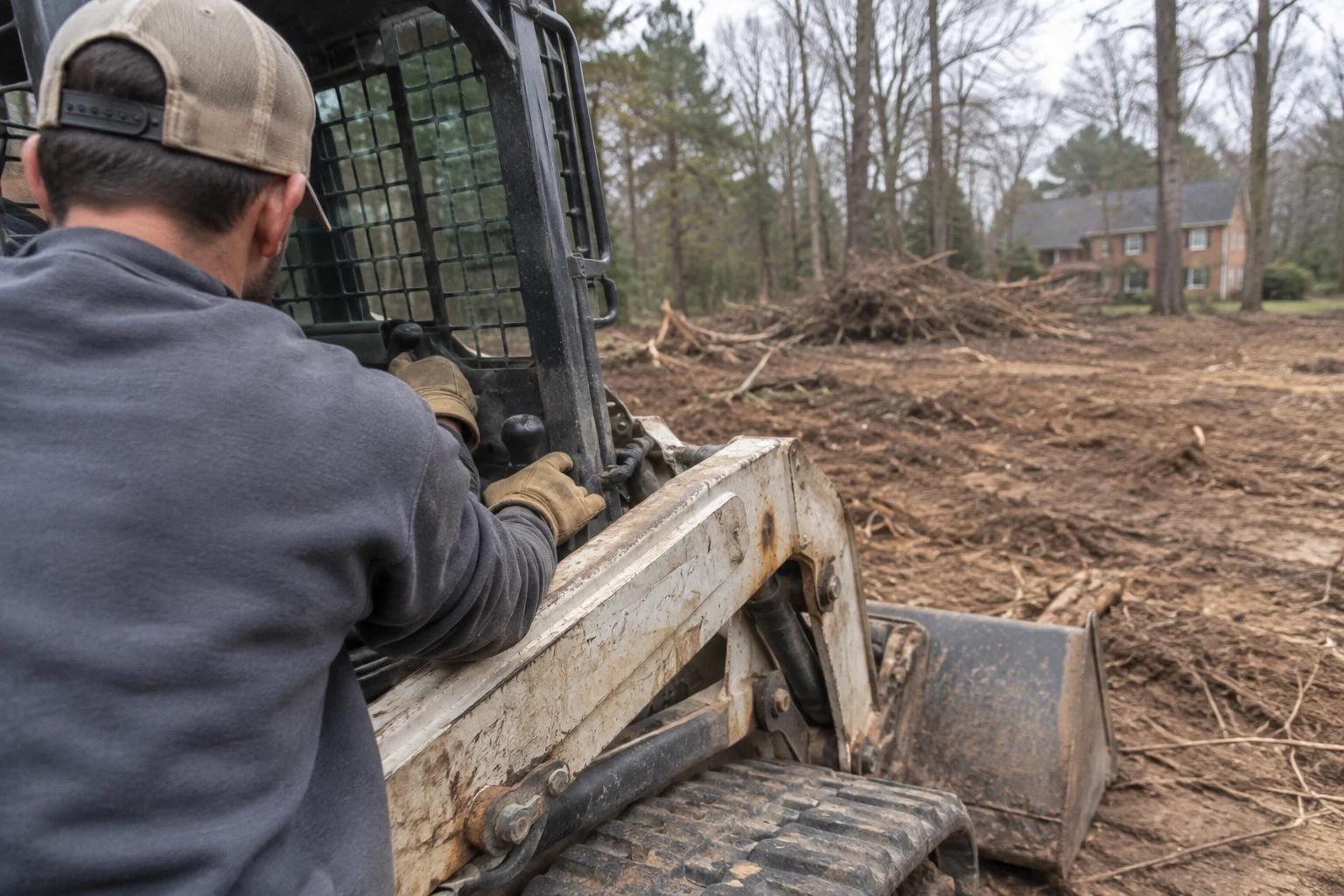
We clear building lots with the finished home in mind. We mark the trees worth keeping, remove what has to go, take out stumps and roots and leave the ground clean. Your lot is ready for grading and a foundation, without piles of debris left behind.
Clearing a lot is the first step of the build
Land clearing removes the trees, stumps, brush and root mass that sit where your house, driveway, septic field or yard will go. Done well, it gives the grading crew firm, open ground and keeps the parts of the lot you love intact. Done carelessly, it leaves buried roots that rot under a slab, compacted soil around the oaks you meant to save and a muddy mess at the road.
We plan the clearing around your floor plan and the way the lot drains, so we only open up the ground the build needs. Mature hardwoods and pines are a big part of why people buy land in the foothills, and many of them can stay if we fence their root zones before any equipment rolls in.
We handle land clearing for families building a custom home, and for owners making room for an addition, a detached garage or a new driveway.
What our land clearing includes
- A lot walk and clearing plan
- We walk the property with you and flag the building footprint, driveway and utility routes, along with every tree you want left standing. The clearing limits are marked on the ground before a single cut is made.
- Tree protection fencing
- Fencing is set around the root zones of the trees we keep. It holds machines, parked trucks and stockpiled soil away from the roots that anchor each tree.
- Tree and brush removal
- Trees inside the clearing limits are felled and removed, and underbrush, vines and saplings are cut back. If you would like firewood, we can stack the usable logs for you.
- Stump and root removal
- Beneath a foundation or driveway we pull stumps and rake out the larger roots, since buried wood decays and leaves soft spots. Where lawn will go, grinding is often enough.
- Erosion control
- Silt fence is installed on the low side of the lot before soil is exposed, so red clay stays put instead of washing onto the road or into a neighbor's yard.
- Haul-off and tidy work days
- Brush and wood are chipped or trucked away rather than left in burn piles, and we scrape mud from the road entrance as the job moves along. Before the crew leaves each afternoon, loose debris is gathered up and machines are parked well clear of the work.
When it makes sense to clear your land
Your house has a rough location
Once a floor plan is chosen and you know about where the home will sit, clearing can be laid out around it instead of guessed at.
Nobody can walk the property
When surveyors, perc testers or your designer cannot push through the brush, a light first pass opens the ground up for them.
Dead or leaning trees near the build area
Trees that are already failing pose a risk during construction and an even bigger one once a roof sits beneath them.
An addition or new driveway is planned
More square footage or a garage often means removing a few trees and stumps near the existing house, which calls for careful, tidy work.
Old stumps where a foundation will go
Stumps left behind by earlier logging must come out completely before grading and footings.
What sets the price of clearing a lot
No two lots carry the same growth, so we price clearing only after we have walked the ground. You get a written estimate broken into line items, so each part of the work is visible. Below are the factors that change the number most.
Acreage and density
A thinly wooded half acre and a stand of thick second growth tangled with underbrush are very different jobs. How much material has to be cut and carried out accounts for most of the hours on site.
Tree size and stump work
Big hardwoods take longer to drop, and their stumps take more effort to pull. Removing stumps and roots fully under a future foundation costs more than grinding them down where lawn will go.
Slope and access
Steep ground, red clay that turns soft after a wet week, or a tight entry from the road all slow the machines down. Sometimes they mean bringing in smaller equipment instead.
Debris handling
Chipping on the lot, hauling material away and stacking logs for your own use are priced differently. We walk you through each option before you decide.
Erosion control and permits
How much silt fence goes in, and whether stormwater permitting applies, depends on the size of the disturbed area and the way water moves across it.
From first call to a cleared lot
- 1
Phone conversation, then a visit
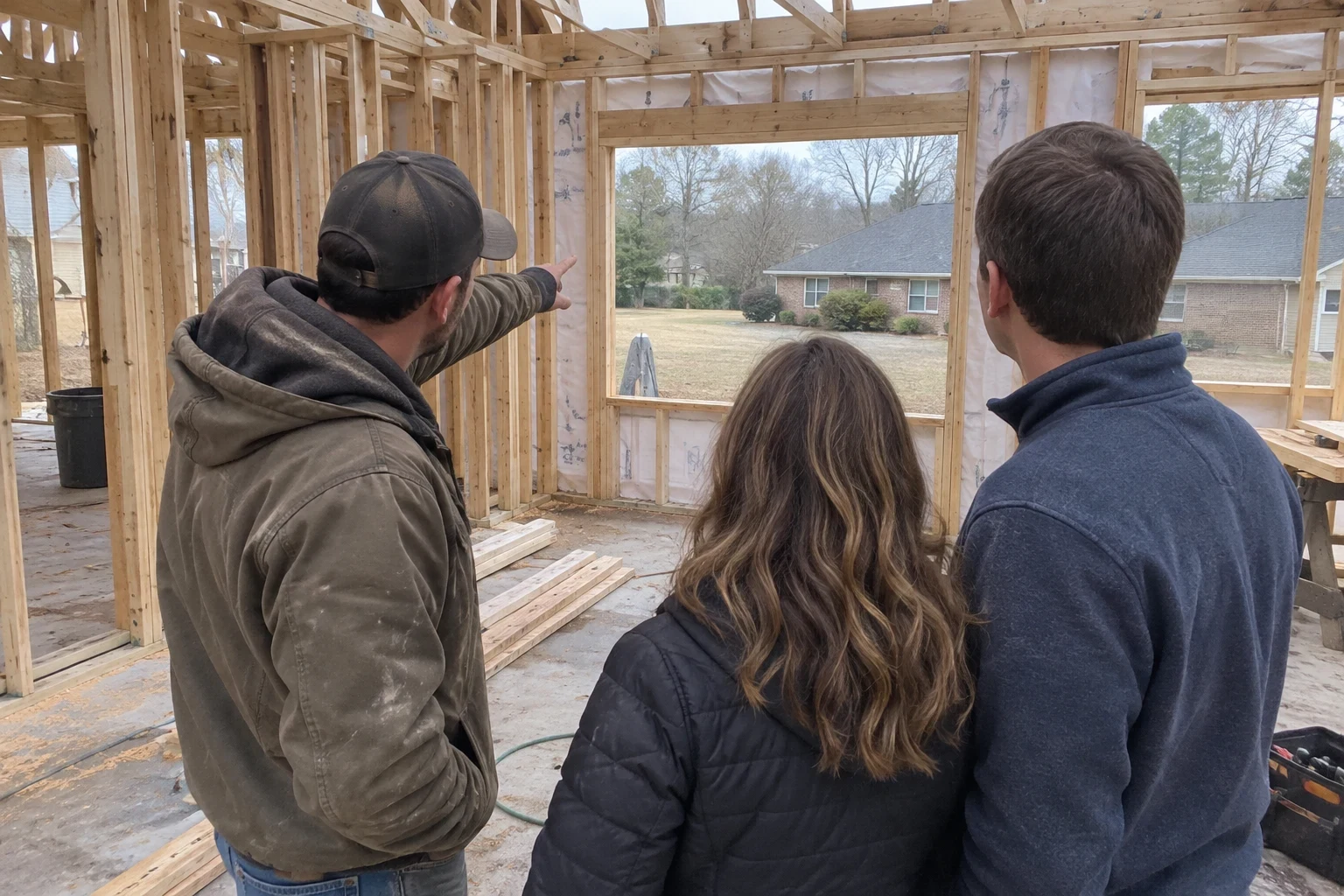
We start with a call about what you plan to build, then meet you on the land. Together we look at slope, drainage, how equipment will get in and which trees matter to you.
- 2
Marking and permits
Clearing limits and keeper trees get flagged, and we confirm which permits apply. When the disturbed area is large enough to bring stormwater rules into play, we settle that before work begins.
- 3
Protection goes in first
Tree fencing, silt fence and a stable gravel entrance are all in place before the first tree is felled.
- 4
Clearing, stumps and haul-off
Trees and brush come down, stumps and roots are pulled from the build areas, and debris leaves the property as the work progresses. Each day closes with the site straightened up.
- 5
Final walk-through
We walk the cleared ground with you and confirm it is ready for grading and foundation work.
Land clearing questions
Can you save specific trees on my lot?
Yes, and that planning starts on the first walk. We flag the trees you want to keep and fence their root zones so machines and soil piles stay off them. A few trees sitting too close to the footprint may not make it through construction, and we will be straight with you about which ones.
Do you burn the brush?
Usually not. We chip it or haul it away. Burning brings state notification rules, smoke and ash your neighbors will notice, and scorched patches on the lot, while chipping and hauling leave the ground cleaner.
Do you hold the right credentials for clearing work?
We are licensed and insured in NC and SC. On a clearing job, with trees coming down and heavy machines moving, that coverage is worth confirming before anyone starts work.
How do you keep mud off the road and my neighbors' property?
A gravel construction entrance and silt fence go in before any clearing begins. Mud that does get tracked out is scraped and swept the same day, and our crews keep brush and debris on your side of the property line.
Is the ground ready to build on once clearing is finished?
Not quite. Shaping the ground with grading usually comes next, and foundation work follows that. We do both, so the clearing is laid out with those stages in mind and the crew that follows starts on clean, firm soil.
Start with a walk across your land
Share a little about the property and the home you have in mind. We will find a time to see it in person and sketch out a clearing plan that keeps the parts worth keeping.